
The Rosana Empowerment Foundation (REF) has reaffirmed its firm opposition to terrorism, torture, cruel, inhuman or degrading treatment, arbitrary punishment and every form of repression that diminishes the dignity of the human person.
The Foundation’s position was contained in a communiqué issued at the conclusion of its 2026 stakeholders’ meeting and public engagement initiative held recently in Bauchi, where it called for greater respect for freedom, dignity, accountability and the protection of every voice.
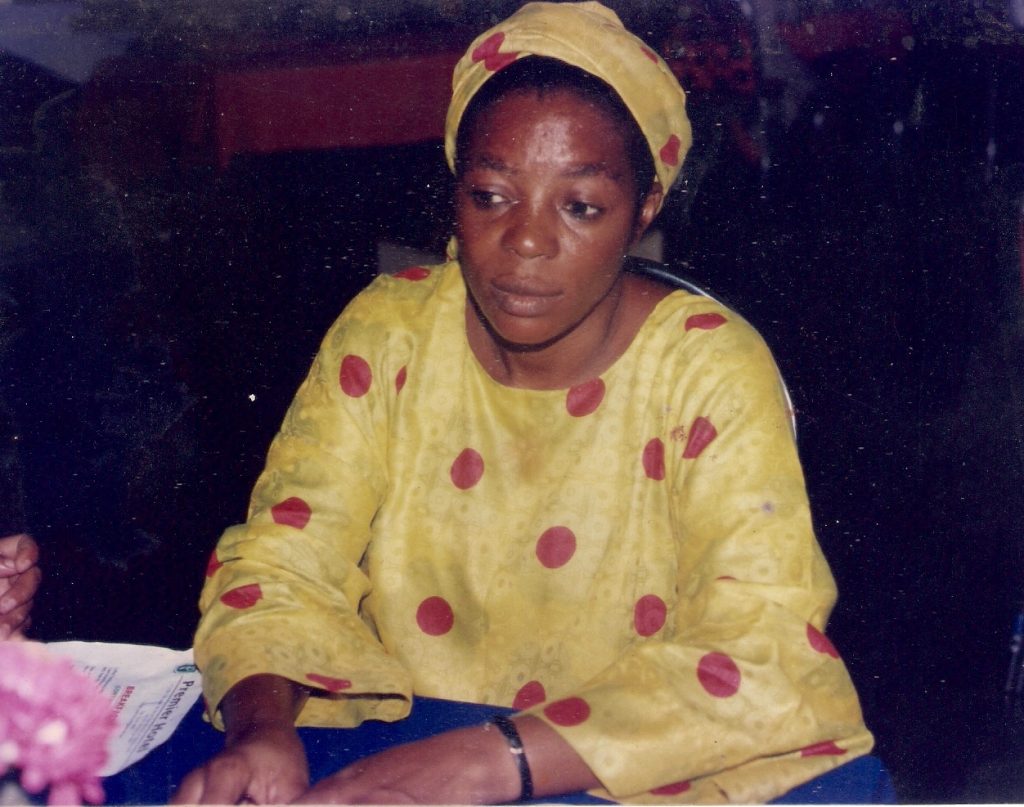
In the communiqué, signed by REF Executive Director, Pst. Ejiogu Vitus Chibueze, the organisation’s Founder, Mrs. Justina Mu’azu Adamu, stressed that every person deserves to be treated as a human being and to enjoy the fundamental rights recognised under national, regional and international human-rights frameworks.
These rights include the freedom to hold opinions, express them peacefully, receive and share information, exercise freedom of conscience and religion, associate with others, assemble peacefully and participate in public affairs.
For REF, these principles cannot be applied selectively.
They must not depend on whether the person concerned is powerful or powerless, wealthy or indigent, popular or unpopular, politically connected or completely without influence.
Human dignity is not reserved for the powerful. Freedom is not a privilege for the connected. Justice must never be determined by status.
The African Charter on Human and Peoples’ Rights expressly protects freedom of conscience and religion under Article 8, the right to receive information and express and disseminate opinions under Article 9, freedom of association under Article 10 and peaceful assembly under Article 11.
These are not merely abstract provisions.
They are fundamental principles upon which accountable and democratic societies are expected to be built.
They become particularly important when citizens question authority, challenge established practices, expose perceived wrongdoing, scrutinise public policy or express opinions that those in positions of power may find uncomfortable.
REF Welcomes the African Human-Rights Warning
REF welcomes the important intervention by the African Commission on Human and Peoples’ Rights through its Committee for the Prevention of Torture in Africa (CPTA).
In its July 2026 call for contributions, the Committee warned that digital technologies developed or deployed for legitimate public-security and governance purposes are being misused in some African countries to identify, locate, monitor and repress human-rights defenders, journalists, political opponents and protesters.
The Committee identified a range of technologies and practices requiring scrutiny, including biometric identification systems, video surveillance, facial-recognition technology, spyware, telecommunications data collection, internet shutdowns and deliberate slowdowns during periods of political or social tension.
This is an increasingly important conversation for Africa.
Digital technology has enormous potential to advance development. It can connect communities, improve public services, strengthen education, facilitate humanitarian assistance, expose wrongdoing and give marginalised communities platforms through which their concerns can be heard.
But technology is not automatically democratic simply because it is digital.
The same tools that can protect citizens can also be misused to monitor them.
The same systems that can improve security can potentially be abused to intimidate people.
And the same platforms capable of amplifying voices can become environments in which those voices disappear without adequate explanation, meaningful review or effective avenues for redress.
For REF, this is why technology must remain firmly anchored in human rights, due process, accountability, transparency and the rule of law.
When Dissent Is Mistaken for Disloyalty
A healthy society does not require everyone to agree.
It requires people to be able to disagree without automatically being treated as enemies simply because they hold a different view.
Dissent is not automatically terrorism.
Criticism is not automatically subversion.
Questioning government policy is not automatically hatred of the state.
Investigative journalism is not automatically an attack on national security.
And expressing an unpopular opinion does not deprive a person of his or her humanity.
REF recognises that freedom of expression carries responsibilities. Freedom does not provide a licence to incite violence, threaten others or engage in conduct that is lawfully prohibited.
There may therefore be circumstances in which restrictions are legitimate. But such restrictions must meet the requirements of legality, legitimate purpose, necessity and proportionality.
That distinction is fundamental.
Where a person is suspected of committing an offence, the appropriate response is evidence, due process, impartial adjudication and an opportunity to be heard.
Where an opinion is demonstrably wrong, it can be challenged with facts.
Where journalism is inaccurate, corrections can be demanded.
Where speech is offensive but lawful, society can disagree with it.
But the answer to uncomfortable speech should not automatically be intimidation, arbitrary detention, harassment, unlawful surveillance, removal from public discourse or punishment without due process.
A government or institution should answer criticism with facts and lawful engagement, not repression simply because the criticism is uncomfortable.

The VITUFEL70 Experience: A Case for Digital Accountability
For REF, the suppression of dissenting voices is not merely a theoretical concern. The Foundation’s own experience within the digital media environment demonstrates how vulnerable an individual’s voice, professional identity and body of public-interest work can become when access to privately controlled digital platforms is restricted.
A significant case reported by SkyDNews.com.ng concerns a journalist and member of REF’s media team whose social-media identity, VITUFEL70, was used on Facebook and Twitter (now X) to publish commentary and engage the public on issues of social and public interest.
According to the journalist’s account and REF’s experience, the associated social-media accounts were disabled following an alleged security breach attributed to unauthorised or malicious activity by a supposed hacker. This occurred despite the accounts having two-factor authentication (2FA) enabled. Subsequent efforts to regain access through the platforms’ prescribed recovery and verification procedures were unsuccessful. Despite repeated notices, appeals, and recovery attempts submitted to Meta, the affected accounts were not satisfactorily restored before the applicable 30-day recovery window expired, resulting in the permanent loss of access to the accounts and the digital identities associated with them.
The consequence was not simply the loss of access to social-media profiles. It also meant the potential loss of years of published writings, professional contacts, audience engagement, public commentary and a digital archive built around the VITUFEL70 identity.
Through the identity, the journalist’s writings and commentary had reached a substantial audience and generated considerable public engagement. While not everyone agreed with the views expressed, disagreement itself is not evidence of wrongdoing.
Indeed, public commentary is expected to generate debate.
A healthy society does not require everyone to hold identical opinions. On the contrary, the ability to express differing views, question prevailing positions and engage in peaceful disagreement is an important feature of an open and democratic society.
A society in which everyone appears to agree may not necessarily be a society at peace; it may be a society in which people are simply afraid to disagree.
REF does not, without independent evidence, attribute the disabling of the VITUFEL70 accounts to any particular individual, organisation or government, nor does the Foundation suggest that every account suspension amounts to an act of repression. Digital platforms have legitimate responsibilities to establish and enforce rules designed to protect users and maintain the integrity of their services.
The concern, however, lies in whether such enforcement is accompanied by transparency, proportionality, accountability and meaningful avenues of review, particularly when the affected account represents years of public-interest journalism, commentary and civic engagement.
The VITUFEL70 experience therefore raises a broader question of considerable importance:
What happens to freedom of expression when an individual’s public voice, professional identity, digital archive and years of public engagement depend substantially on a privately controlled digital platform?
This question deserves serious attention from governments, technology companies, journalists, civil-society organisations, human-rights defenders and digital-rights advocates.
For journalists, researchers, activists, community advocates and public-interest commentators, losing access to an established digital account can have consequences far beyond the temporary loss of a social-media profile.
Such an account may contain years of published material, professional contacts, evidence of previous work, public conversations, audience relationships and records of civic engagement. When access is permanently lost, much of that material may become difficult or impossible to retrieve.
This is why transparent content moderation, clear explanations, accessible appeals, meaningful review mechanisms and proportionate enforcement are essential components of a rights-respecting digital environment.
The issue is not whether digital platforms should have rules.
They should.
The issue is whether those rules are applied fairly and whether affected users have a genuine opportunity to understand, challenge and, where appropriate, reverse decisions that significantly affect their ability to communicate with the public.
For REF, digital accountability must therefore extend beyond the question of whether a platform has the right to moderate content or suspend accounts. It must also address how that power is exercised, what safeguards exist against error or abuse, and what remedies are available to people whose legitimate public-interest work may be affected.
The VITUFEL70 experience serves as a reminder that the protection of freedom of expression in the digital age requires more than constitutional and statutory guarantees. It also requires responsible platforms, effective safeguards, fair procedures and meaningful accountability.
The right to speak must be accompanied by a meaningful right to be heard when that voice is challenged.

A Digital Account Can Represent Years of Public Work
The digital environment has fundamentally transformed the architecture of communication.
In the traditional media era, shutting down a newspaper, radio programme or television station could immediately silence a significant public voice.
Today, individuals can build substantial audiences without owning a newspaper, television station or radio frequency.
A journalist can publish directly.
A researcher can communicate findings directly.
A community organiser can mobilise supporters directly.
A human-rights defender can document issues in real time.
A citizen can draw attention to problems that conventional institutions may have overlooked.
This democratisation of communication is one of the great possibilities of the digital age.
But it has also created a new vulnerability.
The gatekeepers have changed.
Traditional media owners and state authorities are no longer the only actors capable of determining who can reach a large audience. Digital platforms now exercise enormous influence over visibility, access and public participation.
That influence comes with responsibility.
REF therefore believes that where an account is disabled, particularly where the consequences are substantial, the affected user should have access to a clear explanation, accessible review procedures and a proportionate process consistent with applicable laws and platform rules.
The objective should not be to prevent legitimate enforcement.
The objective should be fair, transparent and accountable enforcement.
Africa Cannot Fight Repression with Another Form of Repression
The warning from the CPTA is particularly significant because it moves the debate beyond whether surveillance technology is simply “good” or “bad.”
The more important questions are:
Who controls the technology?
Under what law is it being used?
For what purpose?
What safeguards exist?
Who provides oversight?
What remedies are available when the technology is abused?
The Committee’s 2026 call for contributions specifically invites examination of legal frameworks governing digital surveillance, regulatory gaps, implementation and control mechanisms, surveillance directed at journalists and human-rights defenders, facial recognition and biometric profiling, internet shutdowns, digital evidence and the responsibilities of private companies supplying surveillance technologies to states.
These are precisely the kinds of conversations African institutions should encourage.
Security matters.
Counterterrorism matters.
Crime prevention matters.
Public order matters.
National security matters.
But none of these concepts should become a blank cheque for violating human dignity.
The African human-rights framework recognises the absolute prohibition of torture and cruel, inhuman or degrading treatment.
The challenge for African states is therefore not simply to acquire more sophisticated technologies.
It is to build stronger institutions, safeguards and accountability mechanisms around those technologies.
The Poor and the Voiceless Deserve Protection Too
REF’s concern is particularly strong regarding indigent people, vulnerable communities and individuals who have limited access to legal representation, media platforms or political influence.
When a powerful person is threatened, there may be lawyers, publicists, journalists and influential networks capable of responding.
But when a poor citizen is threatened, who speaks?
When a vulnerable person is detained arbitrarily, who demands an explanation?
When a community member’s voice disappears from a digital platform, who helps?
When a journalist is intimidated, who documents the intimidation?
When a human-rights defender becomes the subject of surveillance, who monitors the monitors?
These questions lie at the heart of civil-society work.
REF believes that the strength of a society should be measured, in part, by how it treats those with the least power to defend themselves.
Human rights are most meaningful when they protect people who cannot purchase influence.
Freedom of Expression Is Not a Licence to Harm Others
REF’s defence of freedom of expression should not be misunderstood as a defence of everything that can be said online.
Freedom comes with responsibility.
People should not use freedom of expression as a licence to threaten others, incite violence, deliberately promote harmful falsehoods, encourage hatred or violate the rights of others.
But there is an enormous difference between holding someone accountable for unlawful conduct and punishing someone merely because those in authority dislike the person’s opinion.
That distinction must never be blurred.
A government can rebut criticism.
A ministry can publish a correction.
An agency can provide evidence.
A public official can defend his or her record.
A media organisation can publish a response.
A digital platform can enforce transparent rules.
These are healthier alternatives to arbitrary repression.
Governments Must Not Fear the Mirror
Every government needs honest critics.
Every institution needs people willing to identify weaknesses.
Every public policy requires scrutiny.
Every ministry can make mistakes.
Every agency can fail.
Every public official can be wrong.
That is why dissent has value.
A society where everyone praises those in authority may appear peaceful, but it may simply be a society in which people are afraid to speak.
Silence is not necessarily stability. Sometimes silence is fear. And fear is not good governance.
Democratic governance must therefore be about more than elections.
It must also concern the environment between elections, whether citizens can speak, organise, question, criticise, assemble and participate in public affairs without unreasonable repression.
Digital Surveillance Requires Democratic Oversight
REF supports the CPTA’s call for stronger legal frameworks, implementation mechanisms and oversight of digital surveillance.
Governments should be able to deploy technology for legitimate public purposes.
But there must be safeguards.
At minimum, digital surveillance should be governed by:
- Clear and accessible laws;
- A legitimate and clearly defined purpose;
- Independent oversight;
- Judicial or other appropriate authorisation where required;
- Necessity and proportionality;
- Protection of personal and biometric data;
- Effective remedies for abuse;
- Transparent accountability mechanisms;
- Independent investigation of allegations of misuse;
- Protection for journalists, human-rights defenders and civil society; and
- Appropriate controls over private companies supplying surveillance technologies.
The responsibility of private technology companies must also be examined.
Technology companies are not above accountability simply because they are private entities.
Governments are not above accountability simply because they invoke national security.
And citizens do not lose their rights simply because they express unpopular opinions.
Internet Shutdowns Deserve Particular Scrutiny
The use of internet shutdowns or deliberate slowdowns during periods of political or social tension deserves careful examination.
The internet has become an essential means through which people receive information, communicate, conduct businesses, access education and engage with public institutions.
A blanket shutdown therefore affects much more than political debate.
It can affect students.
It can affect journalists.
It can affect businesses.
It can affect hospitals and emergency communication.
It can affect civil-society organisations.
It can affect families.
And it can affect ordinary citizens who have nothing to do with the political dispute that triggered the restriction.
For this reason, extraordinary digital restrictions should be subjected to rigorous legal justification, oversight and accountability.
Private Technology Companies Must Also Respect Human Rights
It would be a mistake to place the entire responsibility for digital rights on governments.
Digital platforms have enormous influence over public discourse.
Their decisions can determine whether a person communicates with an audience, whether a journalist can access an archive, whether an advocacy campaign reaches supporters or whether a community’s concerns receive public attention.
That influence requires responsibility.
Platforms should provide:
Notice: Users should understand why significant enforcement action has been taken.
Consistency: Rules should be applied fairly rather than selectively.
Appeal: Users should have meaningful opportunities to challenge decisions.
Human review where appropriate: Automated systems should not become the final authority over complex questions involving journalism, public interest and context.
Proportionality: Where a problem can be addressed through a warning, content limitation or other less severe measure, permanent account loss should not automatically become the first or only response.
The goal should be a digital environment where safety and freedom can coexist.
REF’s Message to African Governments
REF calls on governments, ministries, departments and agencies across Africa to remember that citizens are not merely subjects to be managed.
They are human beings whose rights must be respected.
Governments exist to serve the people.
Ministries exist to implement public policy.
Security agencies exist to protect society.
Public institutions exist to advance the public interest.
Technology should strengthen these responsibilities, not become a mechanism for escaping accountability.
REF therefore calls on African governments and public institutions to:
- Respect freedom of expression and opinion.
- Protect journalists and human-rights defenders from intimidation and retaliation.
- Ensure that surveillance powers are strictly regulated by law.
- Establish independent oversight of digital surveillance.
- Protect citizens’ personal and biometric data.
- Avoid arbitrary internet shutdowns and unjustified digital restrictions.
- Ensure due process whenever citizens are accused of wrongdoing.
- Investigate credible allegations of torture, cruel or degrading treatment and arbitrary detention.
- Protect vulnerable and indigent persons who may lack the resources to defend themselves.
- Engage civil society as a partner rather than treating legitimate criticism as hostility.
- Ensure that national-security measures remain consistent with human-rights obligations.
- Create effective remedies for people whose rights have been violated.

REF Calls on Civil Society to Remain Vigilant
The responsibility does not rest with governments alone.
Civil-society organisations must continue documenting abuses.
Journalists must continue asking difficult questions.
Researchers must continue producing evidence.
Human-rights defenders must continue educating communities.
Lawyers must continue defending due process.
Technology experts must continue examining emerging threats.
National human-rights institutions must continue exercising independent oversight.
The ACHPR’s current initiative recognises the important contribution of researchers, academics, journalists, human-rights defenders, NGOs, digital civil-society organisations and national human-rights institutions in understanding and addressing digital surveillance.
This is precisely why civil society must not be silenced.
When civil society is weakened, accountability is weakened.
When journalists are intimidated, information suffers.
When dissent is punished, public debate suffers.
When vulnerable people are ignored, justice suffers.
And when technology becomes a substitute for due process, democracy suffers.
Freedom Must Remain the Standard
The Universal Declaration of Human Rights recognises freedom of thought, conscience and religion, freedom of opinion and expression, and peaceful assembly and association as fundamental rights.
Article 19 specifically protects the freedom to hold opinions without interference and to seek, receive and impart information and ideas through any media.
Freedom of expression is therefore not a minor privilege.
It is foundational to an open society.
A continent seeking stronger democratic institutions, sustainable development, accountable governance and greater citizen participation cannot afford to normalise the suppression of peaceful dissent.
REF’s Position Is Clear
The Rosana Empowerment Foundation (REF) condemns terrorism.
It condemns torture.
It condemns cruel, inhuman and degrading treatment.
It condemns arbitrary punishment.
It condemns repression.
It condemns intimidation of journalists and human-rights defenders.
It condemns the misuse of technology to target vulnerable people.
And it condemns the use of political, administrative, technological or institutional mechanisms to silence legitimate dissent and peaceful opinion.
At the same time, REF recognises that freedom carries responsibilities and that lawful restrictions may sometimes be necessary to protect the rights and safety of others.
But such restrictions must be lawful, necessary, proportionate, transparent and subject to accountability.
There must be no double standard.
The powerful and powerless must be treated as human beings.
The government critic and government supporter must be treated as human beings.
The journalist and public official must be treated as human beings.
The wealthy citizen and indigent citizen must be treated as human beings.
The religious believer and the person of a different or no religious belief must be treated as human beings.
Human dignity cannot depend on agreement with those who hold power.

The VITUFEL70 Experience Must Become a Lesson, Not Merely a Grievance
The experience surrounding REF’s media staff and the disabling of the VITUFEL70 social-media identity should be viewed within this wider conversation about digital accountability.
REF does not claim that every account suspension constitutes political repression. Digital platforms have legitimate responsibilities to enforce their rules, protect users and address violations of their policies.
But whenever an account carrying years of public-interest commentary is disabled, the affected person should have access to a fair, understandable and meaningful process for challenging the decision.
Where such mechanisms fail, the experience raises legitimate questions about digital accountability.
For REF, the lesson is simple:
No individual’s voice should be treated as disposable merely because it is inconvenient.
The answer to disagreement should be argument.
The answer to criticism should be evidence.
The answer to error should be correction.
The answer to unlawful conduct should be lawful due process.
The answer to public concern should be engagement.
Not intimidation.
Not arbitrary punishment.
Not repression.
A Call for a Rights-Respecting Digital Africa
Africa’s digital transformation is inevitable and potentially transformative.
But the continent must decide what kind of digital future it wants.
It can build a digital environment where surveillance operates without sufficient oversight, where platforms remove voices without meaningful remedies, where governments invoke security without adequate transparency and where citizens become increasingly afraid to speak.
Or it can build a digital Africa grounded in rights, dignity, accountability, transparency, privacy and democratic participation.
REF strongly supports the second path of the ACHPR’s 2026 initiative.
The second path of the ACHPR’s 2026 initiative provides an important opportunity for African governments, civil society, technology companies, academics and human-rights institutions to examine these questions honestly.
This conversation must not remain confined to conferences, newsletters or academic papers.
It must reach parliaments.
It must reach ministries.
It must reach security institutions.
It must reach technology companies.
It must reach newsrooms.
It must reach schools and communities.
And it must reach ordinary citizens.
Because the fundamental question is bigger than technology.
It is about what kind of society we want to build.
No Democracy Should Be Afraid of a Voice
A government that listens to criticism becomes stronger.
An institution that accepts scrutiny becomes more accountable.
A society that protects dissent becomes more resilient.
A media environment that permits disagreement becomes more credible.
And a digital ecosystem that gives people meaningful avenues to challenge decisions becomes more trustworthy.
REF therefore calls on governments, ministries, departments, agencies, technology companies and civil-society actors across Africa and beyond to uphold one simple principle:
Treat Every Person as a Human Being.
Do not punish people because they are poor.
Do not silence people because they are inconvenient.
Do not intimidate journalists because they ask difficult questions.
Do not target human-rights defenders because they defend unpopular people.
Do not misuse technology simply because it makes surveillance easier.
Do not confuse criticism with treason.
Do not confuse dissent with disorder.
And do not allow national security to become a blanket justification for actions that undermine human dignity.
Freedom is not a gift from government. Human rights belong to people because they are human.
The responsibility of government is therefore not to determine which citizens deserve freedom.
It is to protect the freedom and dignity of all within the law, while ensuring that legitimate public interests are pursued through lawful, necessary, proportionate and accountable means.
That is the standard REF supports.
That is the standard Africa deserves.
And that is the standard every institution entrusted with public power, or enormous private digital power, should be expected to meet.
The Rosana Empowerment Foundation (REF) reaffirms its commitment to human dignity, freedom of expression, protection of vulnerable persons, democratic participation, accountability and the rule of law.