
The Death of Saleh and the Human Cost of Nigeria’s Drug Crisis
There are statistics that governments publish, reports that institutions produce, arrests that make headlines and seizures that attract public attention. But behind every statistic is a human being. Behind every arrest is a family. Behind every drug-dependent person is a story. And behind every death associated with substance abuse is a question that society must be courageous enough to ask:
Could this life have been saved?
The story of Saleh, a young man from Gombe Road in Bauchi State, is one such story.
Saleh was not a criminal in the sense that many people might immediately imagine when they hear the word “drug user.” He was a hardworking young man with a valuable skill. He repaired high-capacity generators and was known to do good work. He had worked for us at different times, and because of his competence and reliability as a technician, he was someone we could recommend to individuals and organisations seeking his services.
But Saleh had another side to his life.
He was using drugs.
On several occasions, our counsellors engaged him one-on-one, encouraging him to abandon the habit and warning him about its possible consequences—not only for his own health and future, but also for his wife, children, relatives and the wider community.
Those interventions were attempts to prevent a tragedy.
Sadly, the tragedy eventually came.
The last time we encountered Saleh, his condition had deteriorated severely. He was experiencing serious mental and behavioural problems and was no longer the industrious young technician we had known.
We attempted to intervene. We contacted a member of his family and were informed that Saleh had previously been taken to a rehabilitation facility but had left and subsequently disappeared.
He had a wife.
He had children.
He had a trade.
He had skills.
He had people who knew him.
He had people who tried to help him.
But drug dependence had progressively taken away his ability to function normally within his family and community.
We did not completely abandon hope. We continued checking through the family member we had been communicating with. After several months, we followed up again.
The news was devastating.
Saleh was dead.
And that leaves society with an uncomfortable question:
What did society gain from Saleh’s death?
His death did not solve Nigeria’s drug problem.
It did not eliminate drug trafficking.
It did not protect another young person from becoming dependent.
It did not restore his wife and children what they had lost.
It did not return to society the skilled technician he once was.
It simply ended one human life while the system that produced countless other opportunities for drug abuse continued.
Nigeria’s Drug Problem Is Not New
Nigeria’s struggle with illicit drugs and the misuse of psychoactive substances has a long history.
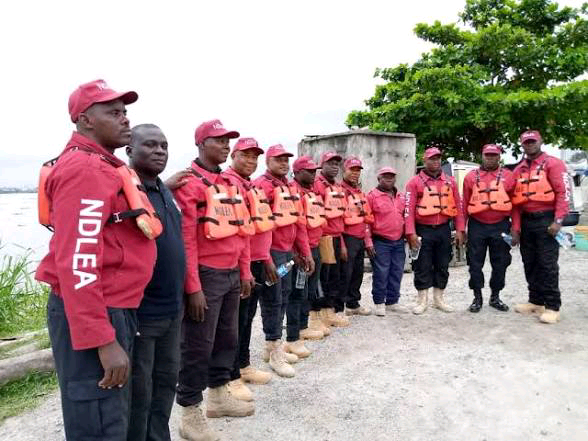
By the late 1980s, the Federal Government had recognised the seriousness of drug trafficking and consumption strongly enough to establish the National Drug Law Enforcement Agency (NDLEA) through Decree No. 48 of 29 December 1989. The agency subsequently became the country’s principal federal institution for combating illicit drug production, trafficking, sale and related offences.
The creation of the NDLEA was itself an acknowledgement that drug trafficking was no longer merely an individual or family problem. It was increasingly understood as a threat to public health, security, development and the wider wellbeing of Nigerian society.
More than three decades later, however, the challenge remains.
Nigeria has experienced the spread of different forms of psychoactive-substance use, including cannabis, pharmaceutical opioids, cough syrups containing codeine, cocaine, heroin, tranquilizers and other substances.
The scale became particularly clear through the Drug Use in Nigeria 2018 survey conducted by the United Nations Office on Drugs and Crime (UNODC), in collaboration with Nigerian authorities.
The survey estimated that approximately 14.3 million people aged 15-64, about one in seven people in that age group, had used a psychoactive substance other than tobacco and alcohol in the previous year. Overall annual prevalence was estimated at 14.4 percent.
The problem was not restricted to one sex or one category of society. The survey estimated annual drug-use prevalence at 21.8 percent among men and 7.0 percent among women. Cannabis was the most commonly used drug, while pharmaceutical opioids were also significant.
These figures are national estimates and should not be automatically presented as the prevalence rate for Bauchi State. Nevertheless, they demonstrate the magnitude of the national challenge within which Bauchi’s experience must be understood.
Bauchi: A Community-Level Warning
Bauchi State is not isolated from Nigeria’s wider drug problem.
Across communities, families and institutions, concerns about substance misuse continue to emerge. Young people are particularly important to the conversation because they represent a substantial proportion of the population and because early exposure to harmful substances can have consequences that extend into education, employment, family life, physical and mental wellbeing and community participation.
But the problem should not be described simply as a “youth problem.”
Drug misuse can affect people at different ages.
It can affect the student.
It can affect the artisan.
It can affect the unemployed.
It can affect the trader.
It can affect the professional.
It can affect parents.
It can affect older people.
And, as the experience of Saleh demonstrates, it can affect people who possess valuable skills and who are capable of contributing positively to society.
The NDLEA itself continues to emphasise that drug demand reduction requires prevention, treatment, care and recovery alongside enforcement. Its drug-demand-reduction structures include public education, community initiatives, counselling, psychosocial interventions, rehabilitation and recovery support.
That is an important distinction.
A person who is dependent on drugs is not simply a statistic to be arrested. The person may also be a human being in need of treatment, counselling, rehabilitation and an opportunity to recover.
From Skilled Technician to a Life Lost
Saleh’s story illustrates this transformation painfully.
At one point, he was a productive artisan.
He had a skill.
People trusted his work.
He could earn an income.
He could contribute to his household.
He had a family.
But substance dependence progressively undermined those strengths.
This is why prevention matters.
It is also why early intervention matters.
And it is why rehabilitation must not be treated as an afterthought.
By the time a person reaches severe dependence, intervention can become much more difficult. Families may become overwhelmed. The individual may reject assistance. Financial resources may be exhausted. Social relationships may deteriorate. Employment may disappear.
In the most tragic circumstances, the person dies.
And everyone is left asking whether something could have been done earlier.
The Drug Market Must Be Addressed, Not Only the Drug User
Nigeria cannot arrest its way out of the drug crisis.
Law enforcement is necessary. Drug trafficking and illegal distribution must be confronted. The NDLEA’s statutory mandate includes curtailing illicit production, importation, exportation, sale and trafficking of psychoactive substances.
But supply reduction must operate alongside demand reduction.
If an addicted person is arrested without receiving appropriate treatment, the underlying problem may remain.
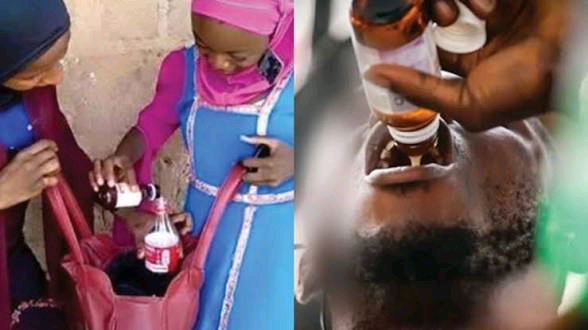
If a young person is warned about drugs while harmful substances remain easily accessible within the community, prevention efforts face a major challenge.
If families are told to seek rehabilitation but rehabilitation services are inaccessible, unaffordable or insufficient, the most vulnerable families may be left without realistic options.
If communities report suspected drug markets but enforcement responses are inconsistent, public confidence can be weakened.
Therefore, Nigeria needs a comprehensive approach:
Prevention + enforcement + treatment + rehabilitation + reintegration + community participation.
Allegations of Protection for Drug Sellers Must Be Investigated
One particularly disturbing allegation reached our organisation during our engagement with the drug-abuse problem in Bauchi.
According to an individual involved in the illicit drug trade, security personnel allegedly visit certain drug-selling locations and collect daily payments that supposedly allow the sellers to continue operating without harassment.
The individual even challenged our workers to observe particular locations in Bauchi during evening hours.
These are serious allegations.
But allegations are not proof.
Rosana Empowerment Foundation does not present such claims as established facts without independent investigation and evidence. Instead, we believe that credible allegations of official complicity in the protection of illicit drug markets deserve impartial investigation by the appropriate authorities.
If the allegations are false, investigation can establish that.
If they are true, those responsible must be held accountable.
There can be no effective war against drug abuse where those responsible for enforcing the law are themselves compromised.
The NDLEA’s mandate includes drug-law enforcement, prosecution and efforts to trace proceeds connected with drug offences. Its current institutional structure also includes asset and financial investigation functions directed at drug-related financial activities.
The principle should therefore be simple:
The law must pursue the drug trafficker, not protect the drug market.
Arrests Must Lead to Justice, Not a Revolving Door
Another concern raised in the account shared with our organisation was that following changes in political or administrative leadership, some drug sellers may be arrested but later return to their activities.
Again, individual claims require verification before being treated as established fact.
But the broader question is legitimate:
What happens after an arrest?
An effective drug-control system cannot be measured only by the number of people arrested.
It must also be measured by:
- convictions secured where evidence supports prosecution;
- illicit markets disrupted;
- trafficking networks dismantled;
- proceeds of crime traced and recovered;
- vulnerable people protected;
- drug availability reduced;
- treatment access expanded;
- people successfully supported through recovery; and
- communities made safer.
Nigeria’s drug-control architecture recognises both enforcement and demand reduction. The NDLEA’s mandate explicitly combines supply-control measures with demand-reduction responsibilities, including prevention, counselling and rehabilitation.
The challenge is therefore not simply to arrest more people.
It is to build a system that prevents, protects, treats, prosecutes and rehabilitates.
Young People Must Not Become the Lost Generation
The most worrying dimension of the problem is its potential impact on young people.
Young Nigerians are central to the country’s future economic, social and political development.
Every young person lost to substance dependence represents more than an individual tragedy.
It can mean:
A lost student.
A lost artisan.
A lost entrepreneur.
A lost parent.
A lost professional.
A lost community volunteer.
A lost community leader.
A lost future.
Saleh’s death should therefore not be viewed merely as a private family tragedy.
It should be viewed as a warning.
If a young person with a useful trade, a family and the capacity to contribute to society can gradually move from productivity to severe dysfunction and ultimately death, then prevention and early intervention systems must be examined critically.
Drug Abuse Is Also a Development Issue
Drug abuse should not be treated exclusively as a criminal-justice issue.
It is a development issue.
It affects education.
It affects employment.
It affects household income.
It affects productivity.
It affects public health.
It affects family stability.
It affects community safety.
It affects children.
It affects social cohesion.
And it can place additional pressure on already stretched health and social-support systems.
The consequences therefore extend far beyond the individual user.
This is why communities, civil-society organisations, faith-based organisations, schools, health workers, traditional institutions, parents, businesses and government agencies must work together.
REF: Government Cannot Do This Alone
Rosana Empowerment Foundation (REF) believes that the responsibility for confronting drug abuse should not be left entirely to government.
Government has the primary responsibility for legislation, enforcement, public health systems and institutional coordination. But communities and civil society can complement those efforts through prevention, awareness, counselling, referrals, rehabilitation support, advocacy, research, community mobilisation and reintegration.
REF’s commitment is rooted in the belief that the lives of vulnerable young people should not be written off.
Those who are struggling with substance misuse should not automatically be labelled as hopeless.
They need appropriate intervention.
They need counselling.
They need treatment where clinically indicated.
They need rehabilitation.
They need family support.
They need opportunities to rebuild their lives.
And when they recover, they need pathways back into productive society.
What Bauchi Needs
A comprehensive response to drug abuse in Bauchi should include:
1. Stronger community prevention
Anti-drug education should reach schools, markets, workshops, religious institutions, youth groups, transport communities and other settings where young people and vulnerable populations interact.
2. Early identification and referral
Families and community leaders need accessible mechanisms for referring people experiencing problematic substance use to qualified health and rehabilitation services.
3. More accessible rehabilitation
Rehabilitation should be available to people who genuinely need it, with appropriate professional supervision and continuity of care.
4. Family support
Drug dependence affects families. Families therefore need counselling and practical guidance on how to support recovery safely and appropriately.
5. Youth empowerment
Prevention must be accompanied by opportunity.
Skills development, employment pathways, entrepreneurship support, education and constructive youth engagement can help address some of the vulnerabilities that leave young people exposed to harmful environments.
6. Stronger community policing and intelligence systems
Communities should have safe and credible channels for reporting suspected illicit drug activity without fear of retaliation.
7. Accountability
Allegations of corruption or official protection of illicit drug markets should be independently investigated. No individual should be above the law.
8. Better data
Bauchi State needs reliable, regularly updated information about substance use patterns, affected populations, treatment access and recovery outcomes. National estimates should not simply be assumed to represent individual states.
9. Rehabilitation and reintegration
Recovery should not end at treatment. Recovered individuals may need skills, employment opportunities, family reconciliation and community acceptance.
10. Partnership
Government, civil society, health institutions, law-enforcement agencies, traditional institutions, religious organisations, schools, parents and the private sector must work together.
A Call to Government
The question before government is not whether drug abuse exists.
It does.
The question is whether the response is strong enough.
Government must strengthen the fight against illicit drug trafficking while simultaneously expanding prevention, treatment, rehabilitation and recovery services.
The NDLEA has already developed a broad demand-reduction framework involving prevention, counselling, treatment and rehabilitation. Its War Against Drug Abuse (WADA), launched in 2021, also seeks to mobilise states, local governments and communities around prevention.
The task now is to ensure that these approaches reach communities effectively.
A policy document cannot save Saleh.
A programme that never reaches his community cannot save the next Saleh.
A rehabilitation centre that is inaccessible to his family cannot save another family.
A law that is not consistently enforced cannot dismantle an illicit market.
And an enforcement system compromised by corruption, if such corruption is established, cannot protect the public.
What Did Society Benefit From Saleh’s Death?
Nothing.
His family lost a husband and father.
His community lost a skilled worker.
Those who knew his abilities lost a person they could recommend for work.
Bauchi lost another young life.
Nigeria lost another citizen who could have contributed to its development.
And the drug market remained.
That is the absurdity of allowing substance abuse to continue unchecked.
We lose people while the market survives.
We mourn victims while traffickers search for new customers.
We warn young people while illicit substances continue to reach communities.
We speak about rehabilitation after lives have already deteriorated.
We count arrests while families count losses.
This must change.
From Mourning to Action
Saleh’s story should not end with his burial.
His life should become a reason to act.
His family should not be left alone with their grief.
Other families should not have to experience the same journey.
Other skilled young people should not be allowed to disappear into addiction while society watches helplessly.
And other children should not grow up without parents because a preventable drug problem was allowed to destroy their families.
Rosana Empowerment Foundation believes that the future of vulnerable young people can be reclaimed.
That requires practical commitment to two interconnected priorities:
First, preventing and controlling illicit drug trafficking and substance abuse in Bauchi State and Nigeria.
Second, rehabilitating, counselling, supporting and empowering people affected by drug abuse so that recovery can lead to meaningful reintegration into society.
The fight must therefore move beyond slogans.
It must enter the schools.
It must enter the communities.
It must reach families.
It must strengthen rehabilitation.
It must support young people.
It must confront illicit markets.
It must demand accountability.
And it must protect those who are most vulnerable.
Because the real measure of a society is not how loudly it mourns its dead.
It is how seriously it acts to prevent the next death.