
Why Every Child Needs a Safe, Loving and Responsible Family
A Rosana Empowerment Foundation (REF) advocacy message for Global Kinship Care Week 2026
There is an institution older than governments, older than parliaments, older than political parties, older than universities and older than modern economies.
It is the family.
Before there was a president, there was a family.
Before there was a king or queen, there was a family.
Before there was a professor, doctor, engineer, farmer, lawyer, journalist, pastor, scientist, entrepreneur or community leader, there was a family or a family-like environment in which that human being was nurtured.
This is why the family cannot be treated as an insignificant private arrangement.
The strength of families has profound consequences for the strength of society.
The Universal Declaration of Human Rights recognized this principle in Article 16(3), describing the family as “the natural and fundamental group unit of society” and affirming that it is entitled to protection by society and the State.
For Rosana Empowerment Foundation (REF), this is not merely a statement for textbooks.
It is a development issue.
It is a child-protection issue.
It is an education issue.
It is an economic issue.
It is a community-resilience issue.
And above all, it is a question of what kind of society we want to leave for the next generation.
THE FAMILY IS WHERE SOCIETY BEGINS
A child does not first meet government.
A child does not first meet a school.
A child does not first meet the labour market.
A child ordinarily first meets family.
It is within family relationships that children begin to learn language, trust, responsibility, cooperation, boundaries, culture and identity.
Before a teacher teaches a child mathematics, someone at home usually teaches that child how to listen.
Before a school teaches citizenship, someone has often already taught the child how to treat other people.
Before a child becomes a professional, leader or entrepreneur, somebody has helped shape the person’s character.
This is why family strengthening must be part of serious development work.
We cannot build strong communities while consistently neglecting the institutions that raise the people who make up those communities.
EVERY LEADER CAME FROM SOMEWHERE
History is full of kings and queens, presidents and prime ministers, scientists and inventors, doctors and lawyers, farmers and entrepreneurs, teachers and religious leaders.
They all began as children.
And children need people.
They need someone to hold them when they are helpless.
Someone to feed them when they cannot feed themselves.
Someone to teach them.
Someone to protect them.
Someone to correct them.
Someone to encourage them.
Someone to tell them that they matter.
The family therefore performs one of society’s most important functions:
It prepares human beings for participation in society.
A society cannot continuously produce responsible citizens while ignoring the environments in which children are formed.
FAMILY IS MORE THAN BLOOD
However, preserving family does not mean reducing family to biological relationships.
A family is also about belonging, responsibility, protection, love and care.
A child may lose a parent and be raised by a grandmother.
Another may be cared for by an aunt.
Another may live with an uncle.
Another may be adopted.
Another may have a foster parent.
Another may have a responsible step-parent.
Another may be cared for by another relative or trusted family-like caregiver.
These relationships matter.
This is one reason kinship care deserves far greater attention.
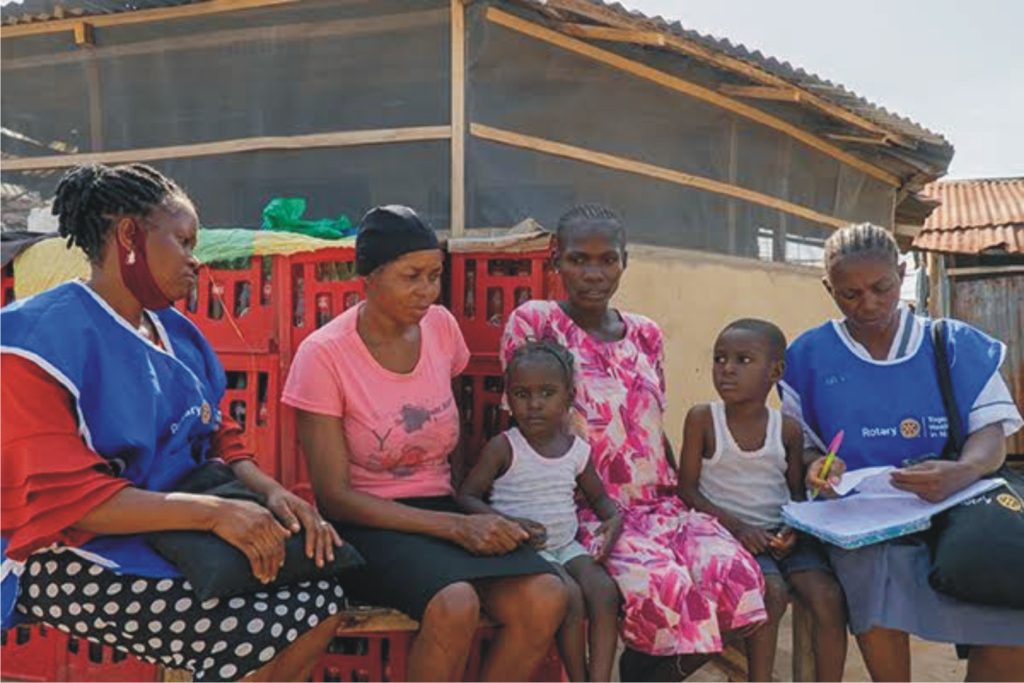
Kinship care occurs when children who cannot safely remain in the care of their parents are cared for by relatives or other people with whom they have an established family connection.
The principle is simple:
When a child cannot remain safely with a parent, can a safe family member or trusted family connection provide the care the child needs?
This approach can help children remain connected to their family, community, culture and identity.
GLOBAL KINSHIP CARE WEEK: A GLOBAL CALL TO STRENGTHEN FAMILIES
2026 marks the third year of Family for Every Child’s Global Kinship Care Week, highlighting kinship families around the world.
The campaign draws attention to a form of care that exists across the world but is frequently overlooked or inadequately supported.
Family for Every Child emphasizes that kinship care can strengthen families, keep children connected to community and culture, and provide a family-based alternative for children who cannot safely remain with their parents.
This is not a small issue.
UNICEF estimates that around 2 million children were living in residential care globally in 2025 and emphasizes efforts to prevent unnecessary institutionalisation and maintain children within families where this is possible and in their best interests. Where children cannot remain with their parents, family-based alternatives such as kinship care and foster care should be considered alongside other appropriate options.
The lesson is powerful:
A child should not lose family simply because the child’s parents are unable to provide care.
Sometimes the family around the child can become the solution.
NIGERIA ALREADY RECOGNIZES THE IMPORTANCE OF KINSHIP CARE
This message is particularly relevant to Nigeria.
Nigeria’s National Guidelines for the Alternative Care of Children provide a regulatory framework for children who are deprived of appropriate family care. The guidelines recognize both formal and informal kinship care and provide procedures for assessing and supporting relatives who take responsibility for children.
The guidelines emphasize important safeguards, including assessment of prospective kinship caregivers, counselling and support, consideration of the child’s views, keeping siblings together where appropriate, maintaining children close to their family and community, and protecting children from neglect, abuse, violence and exploitation.
This is exactly the type of balanced approach society needs.
Family preservation must never mean preserving abuse.
Where a family is safe and capable of caring for a child, society should strengthen it.
Where a family is struggling, society should support it.
Where a child cannot safely remain with the parents, responsible kinship care should be explored.
Where even kinship care is unsafe, appropriate alternative protection must be provided.
The guiding principle must always be:
The best interests, safety, dignity and well-being of the child.
WHY FAMILIES MATTER
Families perform countless functions that society often takes for granted.
1. Families provide belonging
A child needs to know:
“I belong somewhere.”
“I am loved.”
“Someone cares about me.”
“I have people who will stand with me.”
That sense of belonging can become one of the strongest foundations of a person’s identity.
2. Families transmit values
Honesty, responsibility, respect, compassion, discipline, hard work and service are not sustained by laws alone.
Children learn by watching adults.
They watch how parents communicate.
They watch how adults resolve disagreements.
They watch how people treat the elderly.
They watch whether promises are kept.
They watch whether people apologise.
They watch how money is handled.
They watch how vulnerable people are treated.
Family is therefore a school of character.
3. Families transmit culture
Language, names, stories, traditions, food, faith practices, history and community identity are frequently passed from one generation to another through families.
Kinship care can be particularly valuable because it may keep children connected to their relatives, community and culture. Family for Every Child identifies this as one of the important strengths of kinship care.
4. Families support education
Education does not begin at school.
It begins at home.
A parent or caregiver who asks, “What did you learn today?” is communicating that education matters.
A father who attends a school meeting is demonstrating responsibility.
A mother who helps a child read is participating in education.
Grandparents, uncles, aunts and other caregivers can also play this role.
UNICEF’s Care for Child Development approach emphasizes responsive caregiving and the role of parents and caregivers in promoting children’s cognitive, language and social-emotional development.
5. Families provide protection
A healthy family can become a child’s first protection system.
Someone notices when the child is sick.
Someone notices when the child is frightened.
Someone notices when behaviour changes.
Someone can intervene when a child is bullied or threatened.
Someone can identify signs of abuse.
Someone can seek help.
When family relationships are strong, children are less alone when facing life’s challenges.
MEN AND WOMEN NEED EACH OTHER
One of the troubling features of our generation is the increasing tendency to present men and women as competitors rather than partners.
But humanity does not advance by declaring one sex unnecessary.
Men and women have different experiences, strengths, responsibilities and contributions.
Children benefit when the adults responsible for them cooperate.
A healthy family requires communication.
It requires sacrifice.
It requires mutual respect.
It requires responsibility.
It requires forgiveness.
It requires accountability.
It requires people who understand that family is bigger than personal convenience.
The answer to irresponsible men is not to declare men unnecessary.
The answer is to raise responsible men.
The answer to irresponsible women is not to condemn women.
The answer is to support and empower responsible women.
The goal should be partnership, not war.
FATHERHOOD MATTERS
We must be courageous enough to say it:
Responsible fatherhood matters.
Research has found positive associations between father involvement and children’s social, behavioural, psychological and cognitive development.
But this statement requires an important qualification.
Being biologically male does not automatically make someone a good father.
A responsible father provides more than DNA.
He provides presence.
He provides guidance.
He provides protection.
He provides emotional support.
He accepts responsibility.
He models character.
He respects the child’s mother.
He participates in education.
He disciplines without cruelty.
He loves without manipulation.
Fatherhood is not simply producing a child.
Fatherhood is helping to raise a human being.
THE BIBLICAL PICTURE OF FAMILY
For people who draw their understanding of family from the Bible, the creation account presents humanity in relational terms.
Genesis 2:18 records the declaration that it is not good for the man to be alone, while Genesis 2:24 describes the union of man and woman and the formation of a family relationship.
The Biblical picture therefore presents human beings as relational rather than isolated.
The Bible also repeatedly places responsibilities upon parents to teach their children.
Deuteronomy 6:6-7, for example, instructs parents to teach God’s commands diligently to their children.
The lesson is clear:
Parenthood carries responsibility for formation.
And that responsibility belongs to both men and women.
THE JEWISH TRADITION OF BLESSING CHILDREN
A fascinating example comes from Jewish family tradition.
In many Jewish households, children are blessed on Friday evening at the beginning of Shabbat. The practice is associated with the biblical priestly blessing in Numbers 6:24-26.
The tradition illustrates an important idea:
A father or mother is not merely someone who provides food and shelter.
A parent is also someone who speaks identity, hope, blessing and purpose into the life of a child.
The message to today’s parents should therefore be:
Do not only provide for your children. Speak to them. Listen to them. Guide them. Encourage them. Bless them.
THE CHALLENGE OF MODERN TECHNOLOGY
Technology has transformed society.
It has made communication faster.
Information is available almost instantly.
Medical science has advanced.
Reproductive technologies have created possibilities previous generations could scarcely imagine.
But technological possibility does not eliminate human responsibility.
Technology may make certain aspects of parenthood easier to initiate.
It cannot make parenthood itself easy.
Having a child is one thing.
Raising a child is another.
Producing a biological child is not the same as creating a safe, loving and stable childhood environment.
That distinction must never be forgotten.
SINGLE MOTHERHOOD: A CONVERSATION WE MUST HANDLE WITH COMPASSION AND HONESTY
This is a sensitive subject.
Some women deliberately choose single motherhood.
Others become single mothers because of divorce.
Some because of widowhood.
Some because the father abandoned them.
Some because of violence or abuse.
Some because of circumstances beyond their control.
Some because of decisions they later regret.
We must therefore never shame single mothers.
A woman raising children alone often carries an extraordinary burden.
She may simultaneously become:
Mother.
Provider.
Counsellor.
Protector.
Caregiver.
Disciplinarian.
Teacher.
Financial manager.
Emotional support system.
That burden can be enormous.
Therefore, society should not romanticise the hardship of single parenthood.
But neither should society stigmatise the single mother.
Support her. Empower her. Protect her.
At the same time, where a responsible and safe father can participate positively in the child’s life, society should encourage that involvement.
Children should not be deprived of a healthy parental relationship merely because adults are experiencing conflict.
But where a father is violent, abusive or dangerous, the child’s safety must come first.
Family preservation must never mean preserving abuse.
EVERY CHILD NEEDS LOVING AND RESPONSIBLE ADULTS
The statement “every child needs a father” expresses an important truth about the value of responsible fatherhood, but it should be understood carefully.
Not every child has a biological father who can safely participate in his or her life.
Some fathers die.
Some abandon their children.
Some are abusive.
Some are absent.
Some are incapable of responsible parenting.
In such circumstances, a grandfather, uncle, stepfather, foster father, adoptive father, teacher, coach, community leader or another responsible adult may become an important father figure.
Therefore, our message should be:
Every child needs loving, safe and responsible adults—and, wherever possible and in the child’s best interests, a healthy relationship with a responsible father or father figure.
That is a message worthy of serious advocacy.
A BAD FATHER SHOULD NOT BE PRESERVED AT THE EXPENSE OF A CHILD
There is a dangerous misconception that preserving a family means keeping everyone under the same roof regardless of circumstances.
That is not family preservation.
If a father beats his wife, the answer is not to tell the woman to endure violence because the children need a father.
If a parent sexually abuses a child, protection must come first.
If a household is dangerous, separation may be necessary.
The objective is not merely:
“Keep the family together.”
The objective is:
“Keep children safe and strengthen families wherever it is safe and appropriate to do so.”
That distinction is fundamental.
THE FAMILY IS AN ECONOMIC SAFETY NET
Families also function as economic support systems.
A grandmother may care for grandchildren.
An uncle may pay school fees.
An aunt may provide accommodation.
A sibling may help another sibling start a business.
Relatives may support a widow.
Families may contribute during illness or emergencies.
This informal safety net is especially important in communities where formal social-protection systems are limited.
When families collapse, communities and governments may inherit responsibilities that families previously carried.
This is another reason why family strengthening is development work.
WHAT GOVERNMENTS SHOULD DO
If governments genuinely want stronger societies, family strengthening should become part of public policy.
Governments should invest in:
- Parenting education.
- Positive fatherhood programmes.
- Maternal support.
- Child protection.
- Social protection.
- Family counselling.
- Mental-health services.
- Economic empowerment.
- Prevention of domestic violence.
- Prevention of child marriage.
- Support for children with disabilities.
- Kinship-care support.
- Foster-care systems.
- Family reunification where safe and appropriate.
- Early childhood development.
- Community-based child protection.
- Data systems for vulnerable children and families.
Governments should not wait until families completely collapse before intervention begins.
Prevention is better than crisis response.
WHAT CIVIL SOCIETY SHOULD DO
Civil-society organisations also have a responsibility.
When a child drops out of school, we should ask what is happening around that child.
When a woman becomes economically vulnerable, we should examine how that vulnerability affects her children.
When grandparents are raising grandchildren, we should ask what support they need.
When a father is absent, we should ask what barriers are preventing responsible involvement.
When a family is struggling, we should ask:
“How can we strengthen this family before separation becomes inevitable?”
This is the spirit behind kinship-care advocacy.
REF’S POSITION
Rosana Empowerment Foundation believes that strong families are essential to strong communities.
Our commitment to women, children, youth, vulnerable populations, economic empowerment and community resilience naturally connects with family strengthening.
REF therefore welcomes Global Kinship Care Week 2026 and its call for greater recognition and support for kinship families.
We believe:
Every child deserves safety.
Every child deserves love.
Every child deserves protection.
Every child deserves belonging.
Every child deserves the opportunity to grow and develop to his or her full potential.
Where parents can safely provide care, families should be supported.
Where families are struggling, intervention should come before unnecessary separation.
Where parents cannot safely care for their children, responsible kinship care should be considered.
Where kinship care is not appropriate, other safe and suitable family-based or alternative care should be provided.
And throughout every decision:
The best interests of the child must remain central.
A MESSAGE TO FATHERS
T
o fathers:
Your children need more than your surname.
They need your presence.
They need your integrity.
They need your guidance.
They need your protection.
They need your affection.
They need your time.
They need to see you respect their mother.
They need to know that masculinity is not domination.
A man’s strength is not measured by how loudly he shouts.
It is measured by how responsibly he carries his responsibilities.
Be present. Be responsible. Be a father.
A MESSAGE TO MOTHERS
To mothers:
You are valuable.
You deserve dignity.
You deserve safety.
You deserve support.
You should not have to carry every burden alone.
Do not allow pressure to rush you into motherhood or relationships for which you are not prepared.
Choose wisely.
Protect your future.
Protect your children.
And if circumstances make you a single mother, do not allow shame to destroy you.
Seek support.
Build a network.
Accept help.
Your children need a strong and supported mother—not a mother who has been forced to carry the whole world alone.
A MESSAGE TO YOUNG PEOPLE
To young people:
Do not let social media define love for you.
Do not confuse sexual attention with commitment.
Do not confuse pregnancy with proof of love.
Do not choose a life partner simply because you are lonely.
Look at character.
Look at responsibility.
Look at self-control.
Look at how the person handles anger.
Look at how the person treats people who cannot benefit them.
Look at how the person treats children.
Look at whether the person keeps promises.
Marriage is not merely a wedding. Parenthood is not merely childbirth. Family is responsibility.
THE FAMILY WE WANT
REF is not advocating for a perfect family.
There is no perfect family.
We are advocating for a healthy, responsible and safe family.
A family where children are protected.
A family where mothers are respected.
A family where fathers accept responsibility.
A family where grandparents are valued.
A family where relatives support one another.
A family where poverty does not automatically become abandonment.
A family where disability does not become rejection.
A family where disagreements do not become violence.
A family where technology does not replace human connection.
A family where children can ask questions.
A family where mistakes can be corrected.
A family where love and accountability coexist.
SAVE THE FAMILY. STRENGTHEN SOCIETY.
The future of society is ultimately the future of its people.
And the people of tomorrow are today’s children.
If we want honest leaders, raise children with integrity.
If we want peaceful communities, teach children peaceful relationships.
If we want responsible citizens, teach responsibility at home.
If we want compassionate societies, demonstrate compassion in families.
If we want stronger nations, strengthen the families raising those nations.
The family is not the enemy of development.
The family is one of the foundations of development.
Therefore, let us strengthen families before they collapse.
Let us support parents before they become overwhelmed.
Let us empower mothers.
Let us encourage responsible fatherhood.
Let us support grandparents and kinship caregivers.
Let us protect children from violence and exploitation.
Let us prevent unnecessary family separation.
Let us build systems that keep safe families together.
And let us ensure that when children cannot remain with their parents, they are not forgotten.
Because every child deserves a family.
Every family deserves support.
Every caregiver deserves recognition.
And every society has a responsibility to protect the family environment in which its next generation is formed.
SAVE THE FAMILY.
PROTECT THE CHILD.
STRENGTHEN SOCIETY.
Rosana Empowerment Foundation (REF)
For stronger families, protected children, empowered women and resilient communities.