

Every Child Deserves a Family: Strengthening Kinship Care, Protecting Children and Keeping Families Together
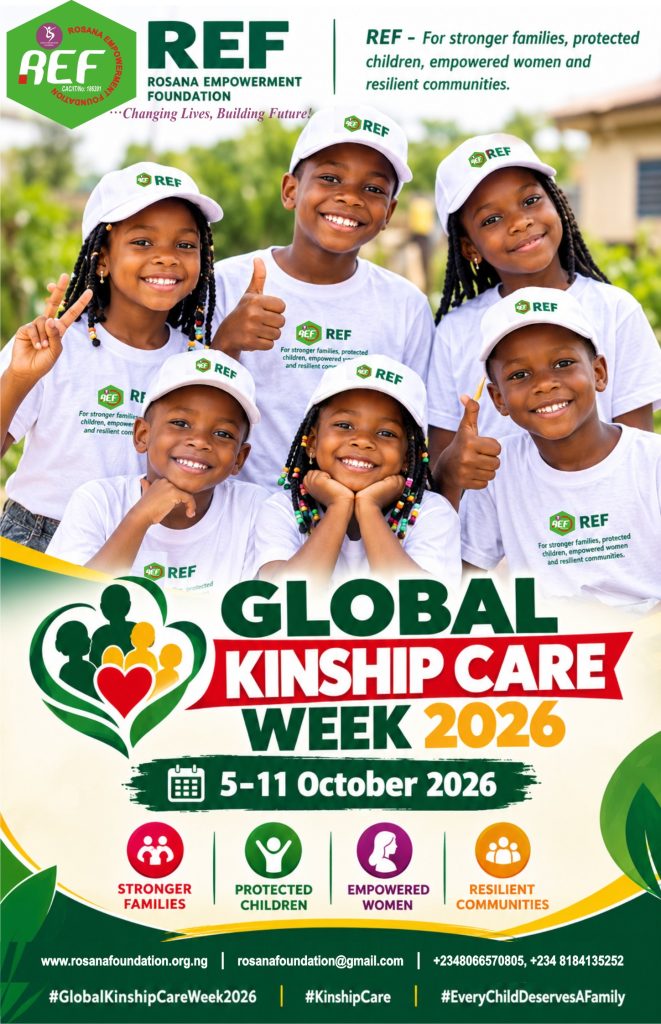
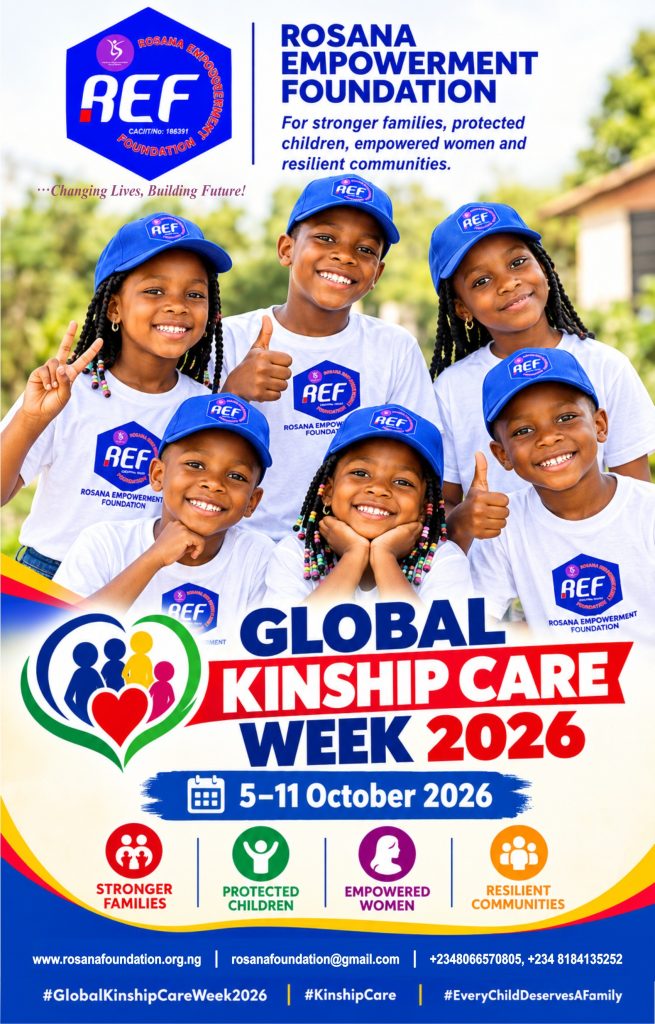
5-11 October 2026
Rosana Empowerment Foundation (REF) proudly joins the global movement to strengthen families, protect children and promote safe, nurturing and family-based care.
There are moments when the world needs to stop and remember something fundamental:
Children belong in families.
They need people who know their names, understand their stories, remember where they came from and care about where they are going.
They need someone who will notice when they are sick.
Someone who will celebrate when they succeed.
Someone who will comfort them when they are afraid.
Someone who will correct them when they go wrong.
Someone who will stand beside them when life becomes difficult.
Someone who will tell them:
“You belong here.”
This is at the heart of Global Kinship Care Week 2026, taking place from 5–11 October 2026.
The campaign, led by Family for Every Child, is entering its third year of shining a light on kinship families around the world. Family for Every Child is a global network of child-protection organisations working with local changemakers to improve the lives of children and families and to promote safer, family-connected care.
For Rosana Empowerment Foundation (REF), this is a campaign that deserves the attention of governments, civil-society organisations, communities, parents, caregivers, traditional leaders, religious leaders, development partners and every person who believes that every child deserves the opportunity to grow up safe, loved and connected to family.
WHAT IS GLOBAL KINSHIP CARE WEEK?
Global Kinship Care Week is an international campaign that brings attention to kinship care and the families who provide it.
Family for Every Child describes kinship care as a widespread form of care in which children who cannot be cared for by their parents are cared for by relatives or other people with an established family connection.
It happens across the world.
It happens in Africa.
It happens in Asia.
It happens in Europe.
It happens in Latin America.
It happens in communities affected by poverty, conflict, migration, illness, disability, family crisis and other circumstances.
And it happens quietly.
Often without recognition.
Often without adequate financial support.
Often without the caregiver receiving the services, training or social protection that other forms of care may receive.
Yet kinship caregivers are performing an extraordinary service.
A grandmother opens her home to her grandchildren.
An aunt takes responsibility for a niece.
An uncle takes in his brother’s children.
An older sibling may step forward when parents are no longer able to provide care.
A family friend may become the person a child knows as “Mum,” “Dad,” “Aunty,” “Uncle,” “Grandma” or simply home.
These people are not merely providing accommodation.
They are helping to preserve a child’s identity, relationships, culture, belonging and future.
WHY KINSHIP CARE MATTERS
Family for Every Child highlights several important strengths of kinship care.
Kinship care can:
- Strengthen families.
- Help keep children connected to relatives.
- Keep children connected to their communities.
- Preserve cultural identity.
- Maintain family relationships.
- Provide continuity during periods of crisis.
- Offer children a familiar environment.
- Support children’s sense of belonging.
- Reduce unnecessary separation.
- Provide a family-based alternative when children cannot safely remain with their parents.
Family for Every Child also emphasizes that kinship care is widespread but often poorly supported. Its global guidance on kinship care describes kinship care as the first form of care that should be explored for children whose parents cannot care for them, while emphasizing that kinship caregivers need appropriate support.
This is a message the world must hear.
Kinship caregivers should not be invisible.
They deserve recognition.
They deserve support.
They deserve information.
They deserve access to services.
They deserve to be included in child-protection systems.
And most importantly, they deserve to be treated as partners in protecting children.
THE GLOBAL CHILD-PROTECTION CHALLENGE
The need for this conversation is enormous.
According to UNICEF, more than two million children are estimated to live in residential care worldwide.
But there is something even more important about this figure:
The majority are not orphans.
UNICEF reports that most children in residential care have at least one living parent or close relative. Children may enter alternative care for many reasons, including poverty, conflict, migration, disaster, discrimination, disability and other family circumstances.
This should make every society pause.
When a child is separated from parents, the question should not simply be:
“Where can we put this child?”
The question should be:
“How can we provide this child with safe, stable, nurturing and appropriate family-based care?”
That is a much more important question.
A CHILD IS NOT A FILE NUMBER
When children enter formal systems of care, there is a danger that they become reduced to paperwork.
A case number.
A registration number.
A placement.
A statistic.
But children are not statistics.
Every child has a name.
Every child has a story.
Every child has memories.
Every child has relationships.
Every child has fears.
Every child has dreams.
Every child has potential.
And every child deserves to be treated as a human being with dignity.
This is why family relationships matter.
A family member may know:
“What makes this child laugh.”
“What frightens this child.”
“What food this child likes.”
“What language this child understands.”
“What happened to this child before.”
“Who this child’s grandparents are.”
“Where this child comes from.”
“What traditions are important to this child.”
That knowledge can be incredibly valuable in helping a child experience continuity and belonging.
WHEN A FAMILY IS IN CRISIS, STRENGTHEN THE FAMILY
One of the most powerful messages behind kinship-care advocacy is that family crisis does not always have to become family separation.
Sometimes parents need economic support.
Sometimes they need parenting support.
Sometimes they need counselling.
Sometimes they need healthcare.
Sometimes they need social protection.
Sometimes they need help obtaining documents.
Sometimes they need support because of disability.
Sometimes they need assistance during emergencies.
Sometimes they simply need someone to help them navigate a difficult period.
If the underlying problem can be addressed, the family may be able to remain together safely.
This is why family strengthening is so important.
UNICEF’s child-protection approach emphasizes preventing unnecessary family-child separation, strengthening families and prioritising family-based alternative care within communities.
Do not wait until a family breaks before offering support.
Support families while they are still capable of becoming stronger.
KINSHIP CARE: KEEPING CHILDREN CONNECTED
Imagine a child losing the ability to live with his or her parents.
That alone can be devastating.
Now imagine that the child is also removed from grandparents.
Removed from siblings.
Removed from cousins.
Removed from familiar language.
Removed from community.
Removed from culture.
Removed from everything that once made life familiar.
The child may survive physically but experience a profound sense of disconnection.
Kinship care can provide another possibility.
Instead of:
“You have lost your parents, therefore you have lost your family,”
the message becomes:
“Your circumstances have changed, but you still have family.”
That is powerful.
A grandmother can say:
“Your mother is still my daughter. You are still my grandchild.”
An uncle can say:
“Your father may not be able to care for you right now, but you are still my nephew.”
An aunt can say:
“You are still one of us.”
These relationships can help preserve something that children desperately need:
Belonging.
KINSHIP CARE AND CULTURE
Children are not raised in a cultural vacuum.
They have languages.
They have names.
They have traditions.
They have histories.
They have stories.
They have food.
They have songs.
They have beliefs.
They have community identities.
When children remain connected to relatives and communities, they may have greater opportunity to maintain these connections.
Family for Every Child specifically identifies maintaining children’s connections to community and culture as an important benefit of kinship care.
This is particularly significant in Africa.
Across African communities, the extended family has historically played an important role in caring for children.
Grandparents matter.
Aunts matter.
Uncles matter.
Older siblings matter.
Community relationships matter.
Kinship care builds upon something many African communities already understand:
A child is not raised by one person alone.
THE NIGERIAN CONTEXT
This conversation is particularly relevant to Nigeria.
Nigeria has developed a National Guidelines for the Alternative Care of Children, supported by UNICEF and SOS Children’s Villages with funding from the European Union and developed with the Federal Ministry of Women Affairs.
The guidelines provide a regulatory framework for services for vulnerable children who do not have appropriate parental or family care.
Importantly, the Nigerian guidelines recognize a continuum of care that includes:
- Prevention of unnecessary separation from families.
- Kinship care.
- Foster care.
- Guardianship.
- Kafalah.
- Adoption.
- Residential care.
- Family-like care.
- Supported independent living.
- Temporary safe care.
The guidelines specifically include kinship care as a form of alternative care.
This is an important step for Nigeria.
But policies alone are not enough.
Policies must reach communities.
Caregivers must know their rights.
Social workers must have the resources to support families.
Children must be protected.
Government agencies must collaborate.
Civil-society organisations must participate.
Communities must understand that kinship caregivers are not simply doing a private favour.
They are contributing to child protection.
THE GRANDMOTHER WHO BECOMES A MOTHER
Consider the grandmother.
She has already raised her own children.
She may be elderly.
She may have limited income.
She may have health challenges.
She may have expected to spend her later years resting.
Then a family crisis occurs.
Her daughter dies.
Or her son becomes incapacitated.
Or conflict separates the family.
Or poverty overwhelms the household.
And suddenly, she becomes a mother again.
She wakes up early.
She prepares food.
She takes the children to school.
She pays what she can.
She disciplines them.
She comforts them.
She worries about them.
She prays for them.
She grows old while raising another generation.
And sometimes nobody says:
“Thank you.”
Global Kinship Care Week gives society an opportunity to change that.
We must see these caregivers.
We must hear their stories.
We must recognize their sacrifices.
And we must ask:
“What support does this caregiver need to continue caring for this child safely?”
KINSHIP CAREGIVERS NEED SUPPORT
It is not enough to tell a relative:
“Please take care of the child.”
That caregiver may need:
- Food support.
- School support.
- Healthcare.
- Psychosocial support.
- Parenting guidance.
- Legal assistance.
- Birth registration assistance.
- Social protection.
- Livelihood opportunities.
- Housing support.
- Child-protection services.
- Respite support.
- Training.
- Community support.
Family for Every Child’s global guidance stresses that kinship care is widespread but frequently inadequately supported.
Therefore:
If society depends on kinship caregivers to protect children, society must also support the caregivers.

KINSHIP CARE IS NOT SIMPLY “TAKING IN A CHILD”
Good kinship care requires more than goodwill.
It requires assessment.
It requires safeguarding.
It requires monitoring.
It requires appropriate support.
It requires understanding the child’s needs.
It requires considering the child’s views.
It requires protecting children from abuse, exploitation and neglect.
It requires considering whether the placement is safe and sustainable.
It requires keeping siblings together where appropriate.
It requires maintaining family and community connections where this is in the child’s best interests.
This is why professional child-protection systems matter.
Family is important.
But safe family care is the goal.
FAMILY PRESERVATION MUST NEVER MEAN PRESERVING ABUSE
This distinction must remain at the centre of the campaign.
We must never say:
“Keep the child with the family at all costs.”
No.
The correct message is:
Keep children with their families wherever it is safe, appropriate and in their best interests.
If a parent is abusing a child, protection must come first.
If a household is dangerously violent, intervention is necessary.
If a relative is exploiting a child, kinship placement with that relative is obviously inappropriate.
If a child cannot safely remain within the family, alternative protection must be provided.
Family preservation is not about protecting adults from accountability.
It is about protecting children and healthy family relationships.
WHY INSTITUTIONAL CARE SHOULD NOT BE THE AUTOMATIC ANSWER
Residential care has a place in some child-protection systems for particular circumstances, but it should not become the automatic response to family hardship.
UNICEF notes that children in residential or institutional care can experience isolation from family and community, and that the long-term effects of family separation and unsuitable alternative care can be serious.
UNICEF therefore promotes efforts to prevent unnecessary family separation and strengthen family- and community-based care.
This is not about attacking every residential-care provider.
Many organisations and professionals work sincerely to protect vulnerable children.
The deeper question is:
Can we prevent the separation in the first place?
Can we support the family?
Can we support the grandmother?
Can we empower the mother?
Can we engage the father?
Can we strengthen the household?
Can we mobilise relatives?
Can we provide social protection?
Can we provide community-based support?
Can we reunite a child safely with family where possible?
These questions should come before institutionalisation whenever appropriate.
GLOBAL KINSHIP CARE WEEK 2026: WHY THIS YEAR MATTERS
The 2026 campaign comes at an important time.
Around the world, child-protection systems are confronting complex challenges:
- Poverty.
- Conflict.
- Displacement.
- Migration.
- Natural disasters.
- Disability.
- Family breakdown.
- Violence.
- Child exploitation.
- Lack of social protection.
- Inadequate access to basic services.
These challenges can push families towards crisis.
And when families experience crisis, children can become the most vulnerable.
That is why strengthening families is not a secondary issue.
It is a frontline child-protection strategy.
Family for Every Child describes its Global Kinship Care Week as an opportunity to shine a light on kinship families worldwide and promote understanding of the importance of kinship care. The 2026 campaign runs from 5–11 October.
A GLOBAL CAMPAIGN WITH A LOCAL MESSAGE
Global Kinship Care Week is international.
But its message is deeply local.
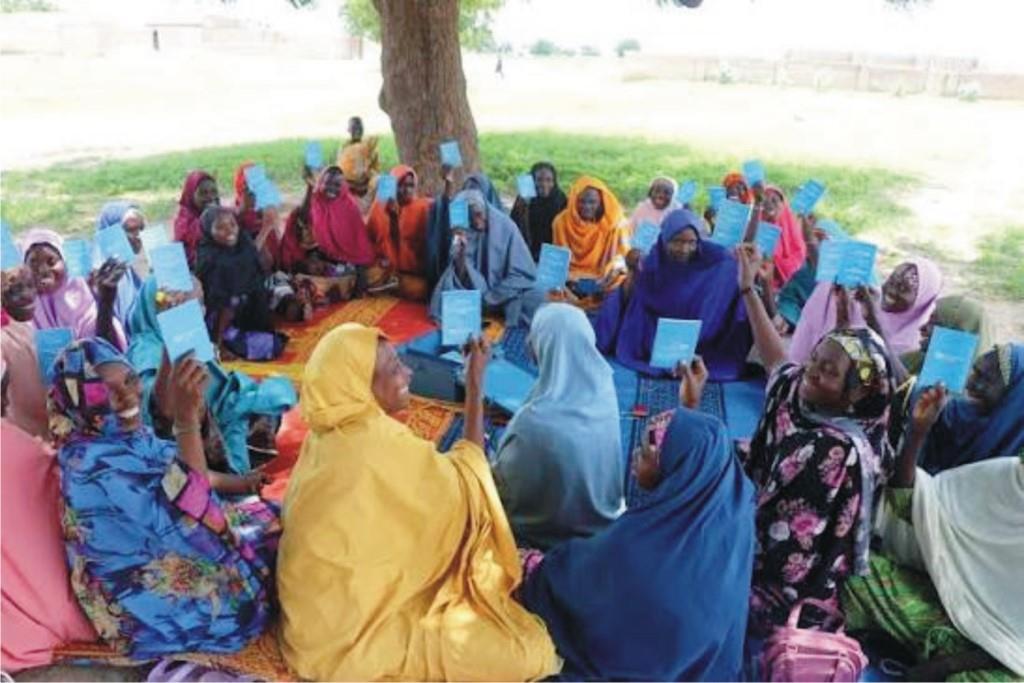
It applies to the grandmother caring for grandchildren in Bauchi.
It applies to the aunt caring for children in Imo.
It applies to the uncle caring for his brother’s children in Gombe.
It applies to the family taking responsibility for children displaced by conflict.
It applies to the relative supporting children after the death of their parents.
It applies to the community that refuses to allow a vulnerable child to become invisible.
The global campaign therefore gives local communities an opportunity to say:
“We care about our children.”
WHAT FAMILIES CAN DO
Families can contribute to stronger kinship care by:
1. Identifying vulnerable children early
Do not wait until the child becomes homeless.
2. Supporting relatives who are struggling
A small intervention may prevent a major family crisis.
3. Keeping communication open
Family members should know who is caring for vulnerable children and what support they need.
4. Protecting children from abuse
Every child deserves safety.
5. Maintaining sibling relationships
Where safe and appropriate, siblings should not unnecessarily lose contact with one another.
6. Preserving culture
Teach children their language, history, family story and traditions.
7. Supporting education
Children in kinship care should not be forgotten educationally.
8. Listening to children
Children should have opportunities to express their views about decisions affecting their lives, consistent with their age and maturity.
WHAT COMMUNITIES CAN DO
Communities can establish stronger systems for identifying and supporting vulnerable families.
Traditional leaders can promote responsible caregiving.
Religious leaders can teach compassion and family responsibility.
Women’s groups can support vulnerable mothers and caregivers.
Youth organisations can promote responsible relationships and parenting.
Community-based organisations can identify children at risk.
Civil-society organisations can provide training and referrals.
Local authorities can strengthen social services.
Everyone has a role.
WHAT GOVERNMENTS CAN DO
Governments have an even greater responsibility.
They can:
Strengthen social protection.
Support vulnerable families.
Invest in social workers.
Improve child-protection systems.
Strengthen kinship-care services.
Provide caregiver assistance.
Improve birth registration.
Support education.
Improve healthcare access.
Strengthen family reunification systems.
Prevent unnecessary institutionalisation.
Improve data on children in alternative care.
Implement national alternative-care guidelines.
UNICEF emphasizes the importance of stronger data systems because reliable information is essential for policymakers to understand the scale and characteristics of children in alternative care and to design appropriate responses.
WHAT CIVIL SOCIETY CAN DO
Civil society has a unique position.
NGOs and community organisations are often closest to vulnerable families.
They can:
- Identify children at risk.
- Identify struggling caregivers.
- Conduct family assessments.
- Facilitate referrals.
- Provide parenting education.
- Strengthen livelihoods.
- Promote child protection.
- Document caregiver experiences.
- Advocate for better policies.
- Monitor implementation.
- Amplify children’s voices.
- Build community awareness.
- Promote positive fatherhood.
- Support women and girls.
- Connect families to government services.
This is an area where organisations such as Rosana Empowerment Foundation (REF) can contribute meaningfully.
REF AND GLOBAL KINSHIP CARE WEEK 2026
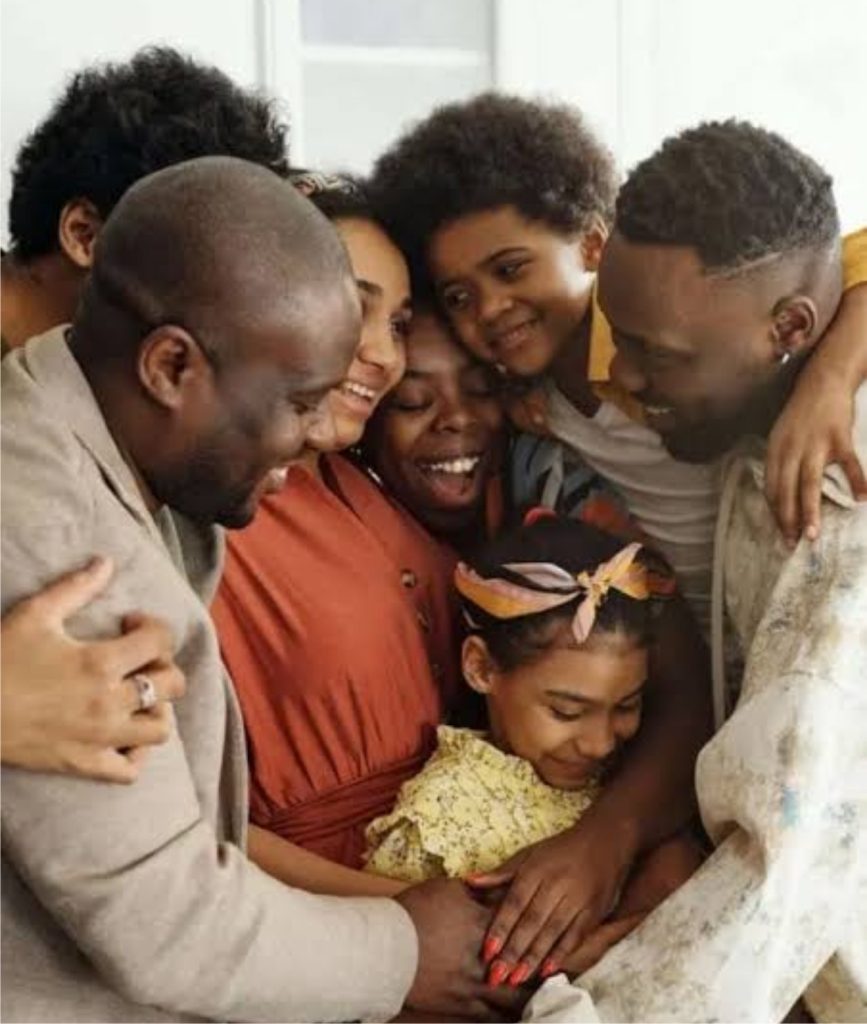
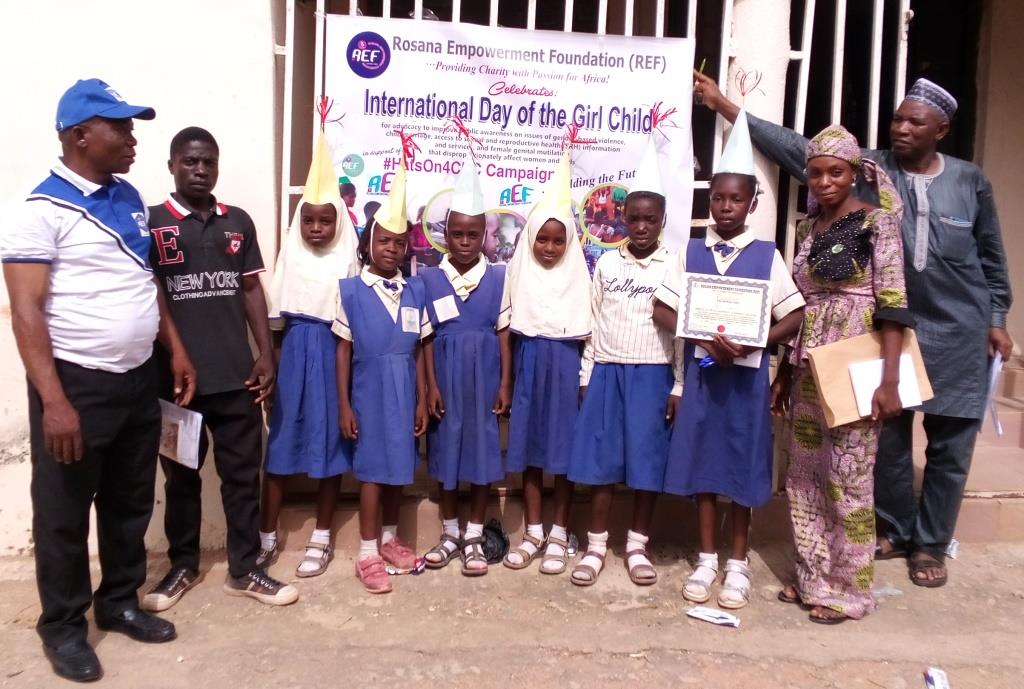
Rosana Empowerment Foundation is proud to associate itself with the values and objectives of Global Kinship Care Week 2026.
REF believes that the well-being of children cannot be separated from the well-being of families.
Our work with women, children, young people and vulnerable communities reinforces a fundamental conviction:
Strong families contribute to strong communities.
And strong communities create better conditions for children to survive, learn, develop and thrive.
REF therefore calls for greater recognition of kinship caregivers and stronger systems to support them.
We call upon:
Government agencies.
Development partners.
Civil-society organisations.
Traditional institutions.
Faith communities.
Community leaders.
Parents.
Grandparents.
Caregivers.
Teachers.
Social workers.
Youth organisations.
Women’s organisations.
And every citizen who cares about children:
Let us strengthen families before they break.
EVERY CHILD DESERVES TO HEAR: “YOU BELONG.”
Imagine the difference between two children.
One child is told:
“You are a problem.”
Another is told:
“You are one of us.”
One grows up feeling unwanted.
The other grows up knowing that someone cares.
One feels disconnected.
The other feels that there is somewhere to return to.
That is why kinship care matters.
It is not merely about providing a bed.
It is about providing belonging.
It is not merely about feeding a child.
It is about providing care.
It is not merely about keeping a child physically alive.
It is about helping the child grow and thrive.
LET US CHANGE THE WAY WE SEE KINSHIP CARE
For too long, kinship caregivers have often been treated as though they are simply doing what families naturally do.
But what if we looked at them differently?
What if we saw them as:
Child-protection partners?
Caregiving heroes?
Community assets?
Family-strengthening champions?
Protectors of children’s identity and culture?
That change in perspective matters.
Because when we recognize caregivers, we become more likely to support them.
And when caregivers are supported, children benefit.
A CALL TO THE WORLD
This Global Kinship Care Week, let us ask ourselves:
How many children in our communities are being raised by grandparents?
How many children are being cared for by aunts and uncles?
How many caregivers are struggling silently?
How many families could remain together if they received timely support?
How many children could avoid unnecessary separation if social protection reached their households?
How many children in residential care have relatives who could potentially care for them safely if those relatives received appropriate support?
These are not merely policy questions.
They are human questions.
They are questions about the kind of society we want to become.
A MESSAGE TO KINSHIP CAREGIVERS
To every grandmother raising grandchildren:
We see you.
To every aunt who opened her home:
We appreciate you.
To every uncle who accepted responsibility:
You matter.
To every older sibling who has had to become a caregiver:
Your sacrifice matters.
To every relative caring for a child during a family crisis:
Your contribution matters.
And to every child living in kinship care:
You matter.
Your story matters.
Your identity matters.
Your future matters.
You deserve to be safe, loved and supported.
THE CENTRAL MESSAGE OF GLOBAL KINSHIP CARE WEEK 2026
The message is ultimately simple:
When children cannot safely remain with their parents, we must look around the family before we look beyond it.
Who is the grandmother?
Who is the grandfather?
Who is the aunt?
Who is the uncle?
Who is the sibling?
Who is the relative?
Who is the trusted family-connected caregiver?
Who can provide a safe and loving home?
And how can society support that person to succeed?
That is the heart of kinship-care thinking.
FROM AWARENESS TO ACTION
Global Kinship Care Week must not end with social-media posts.
It should stimulate action.
It should encourage governments to improve policy.
It should encourage donors to fund family-strengthening programmes.
It should encourage NGOs to support caregivers.
It should encourage communities to identify vulnerable families.
It should encourage professionals to listen to children.
It should encourage families to care for one another.
And it should encourage all of us to recognize that preventing family separation is often better than trying to repair its consequences later.
UNICEF’s current child-protection guidance emphasizes preventing unnecessary family separation, strengthening families and prioritising family-based care where appropriate.
REF’S CALL TO ACTION
As we mark Global Kinship Care Week 2026, 5–11 October, Rosana Empowerment Foundation calls on all stakeholders to:
1. Recognize kinship caregivers
See them, listen to them and value their contribution.
2. Strengthen vulnerable families
Provide support before crisis results in unnecessary separation.
3. Protect children
Ensure every care arrangement prioritizes safety, dignity and the child’s best interests.
4. Support caregivers
Provide economic, psychosocial, educational, legal and social support where needed.
5. Promote family-based care
Where safe and appropriate, consider kinship care and other family-based options before institutional care.
6. Keep children connected
Preserve safe relationships with siblings, relatives, community and culture.
7. Listen to children
Children must have a voice in decisions affecting their lives.
8. Strengthen policy
Implement Nigeria’s alternative-care framework and strengthen systems for vulnerable children and families.
9. Invest in prevention
Do not wait for family breakdown before acting.
10. Build a culture of care
Let every community become a place where vulnerable children and caregivers are supported rather than abandoned.
THE FUTURE BEGINS WITH THE FAMILY
The future of society is sitting in classrooms today.
The future of leadership is playing in our communities today.
The future of Nigeria is growing up in our homes today.
And every child deserves the opportunity to grow within a safe, nurturing environment.
Where parents can safely care for their children, let us strengthen those parents.
Where families are struggling, let us support them.
Where children cannot remain with their parents, let us look to safe kinship and family-based alternatives.
Where kinship caregivers step forward, let us stand behind them.
Where children have already experienced separation, let us help them recover, reconnect and thrive.
Because a child should never have to ask:
“Does anybody want me?”
Our answer must always be:
“Yes. You belong. You matter. You are loved. And we will work together to protect your future.”
JOIN THE GLOBAL MOVEMENT
From 5-11 October 2026, let us make Global Kinship Care Week more than a date on the international calendar.
Let it become a movement.
A movement to strengthen families.
A movement to support caregivers.
A movement to protect children.
A movement to prevent unnecessary separation.
A movement to recognize grandparents, aunts, uncles and other kinship caregivers.
A movement to keep children connected to their families, communities and cultures.
A movement to build child-protection systems that see the whole family.
A movement that says:
EVERY CHILD DESERVES A SAFE AND LOVING FAMILY.
EVERY CAREGIVER DESERVES SUPPORT.
EVERY FAMILY DESERVES A CHANCE TO THRIVE.
EVERY CHILD DESERVES TO BELONG.
SAVE THE FAMILY.
PROTECT THE CHILD.
SUPPORT THE CAREGIVER.
STRENGTHEN SOCIETY.
Rosana Empowerment Foundation (REF)
For stronger families, protected children, empowered women and resilient communities.
GLOBAL KINSHIP CARE WEEK 2026
5–11 October 2026
#GlobalKinshipCareWeek2026
#KinshipCare
#EveryChildDeservesAFamily
#FamilyStrengthening
#ChildProtection
#KeepFamiliesTogether
#SupportCaregivers
#FamilyBasedCare
#RosanaEmpowermentFoundation
#REF